Designing with Water Flow, Not Against It
Water + Drainage Awareness
Water always takes the easiest path. In our region, that often means spring thaw rushing off frozen ground, summer downpours hitting hard surfaces, and lake winds pushing waves where they’ve pushed for decades. When a landscape is designed against that reality, the results show up fast: soggy lawns, shifting steps, pooling near foundations, washed-out gravel, or shoreline erosion that seems to worsen every season.
The better approach is simpler—and more durable: design with the way water already wants to move.
Start by reading the land
Whether you’re a long-time Orillia-area homeowner or managing a cottage property from a distance, the first step is understanding how water behaves on your site. Where does it enter? Where does it collect? Where does it want to leave? In many local neighborhoods, clay soil and freeze-thaw cycles can make “quick fixes” fail quickly. On lakefront properties, high exposure to wind, waves, and storm events raises the stakes even higher.
Slow it down, spread it out, soak it in
Great drainage isn’t about “getting rid of water.” It’s about guiding it responsibly:
- Grading and swales to steer water away from structures and high-use areas
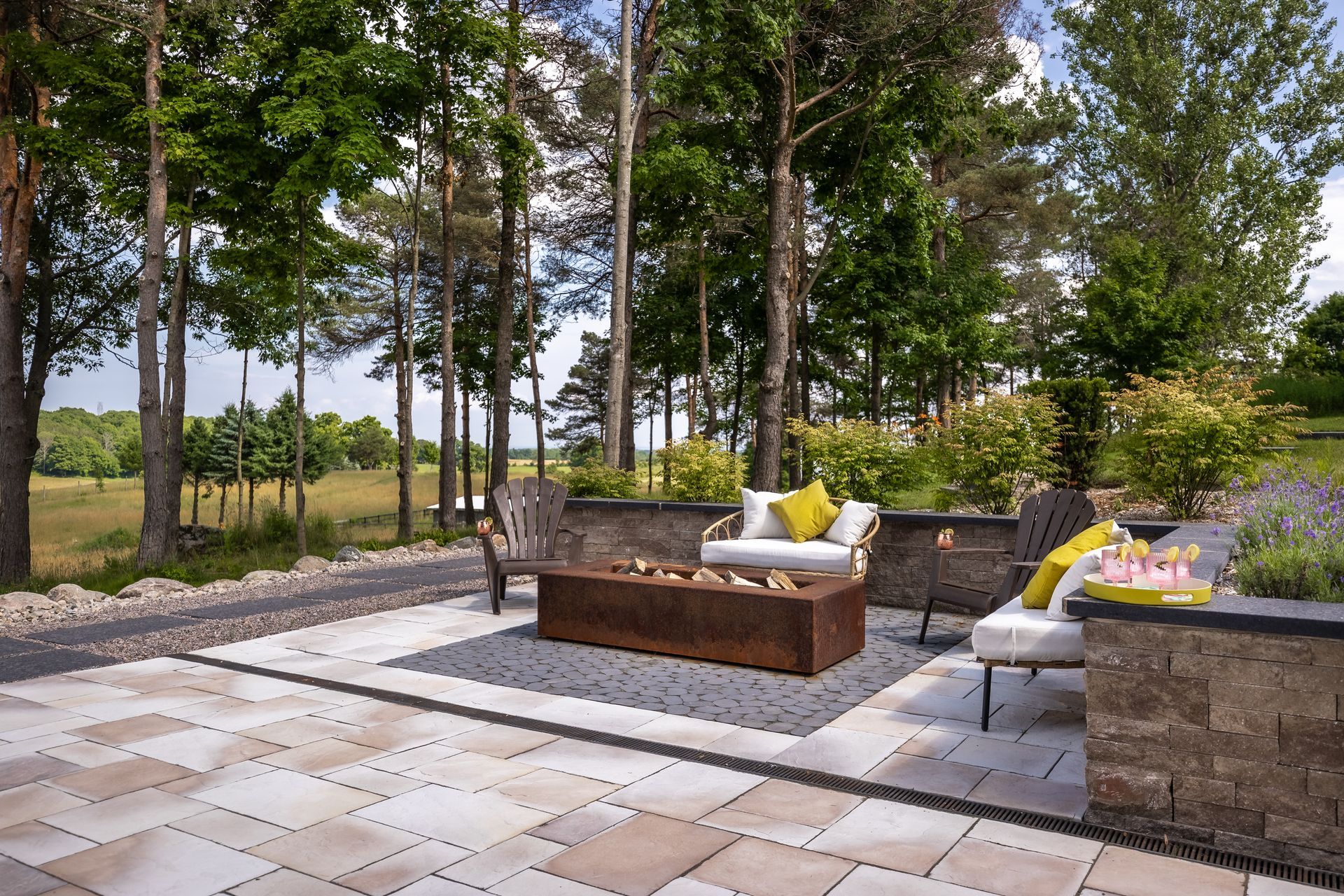
- Permeable surfaces (instead of fully sealed hardscapes) to reduce runoff
- Rain gardens and infiltration zones to capture stormwater, filter it, and let it return to the soil
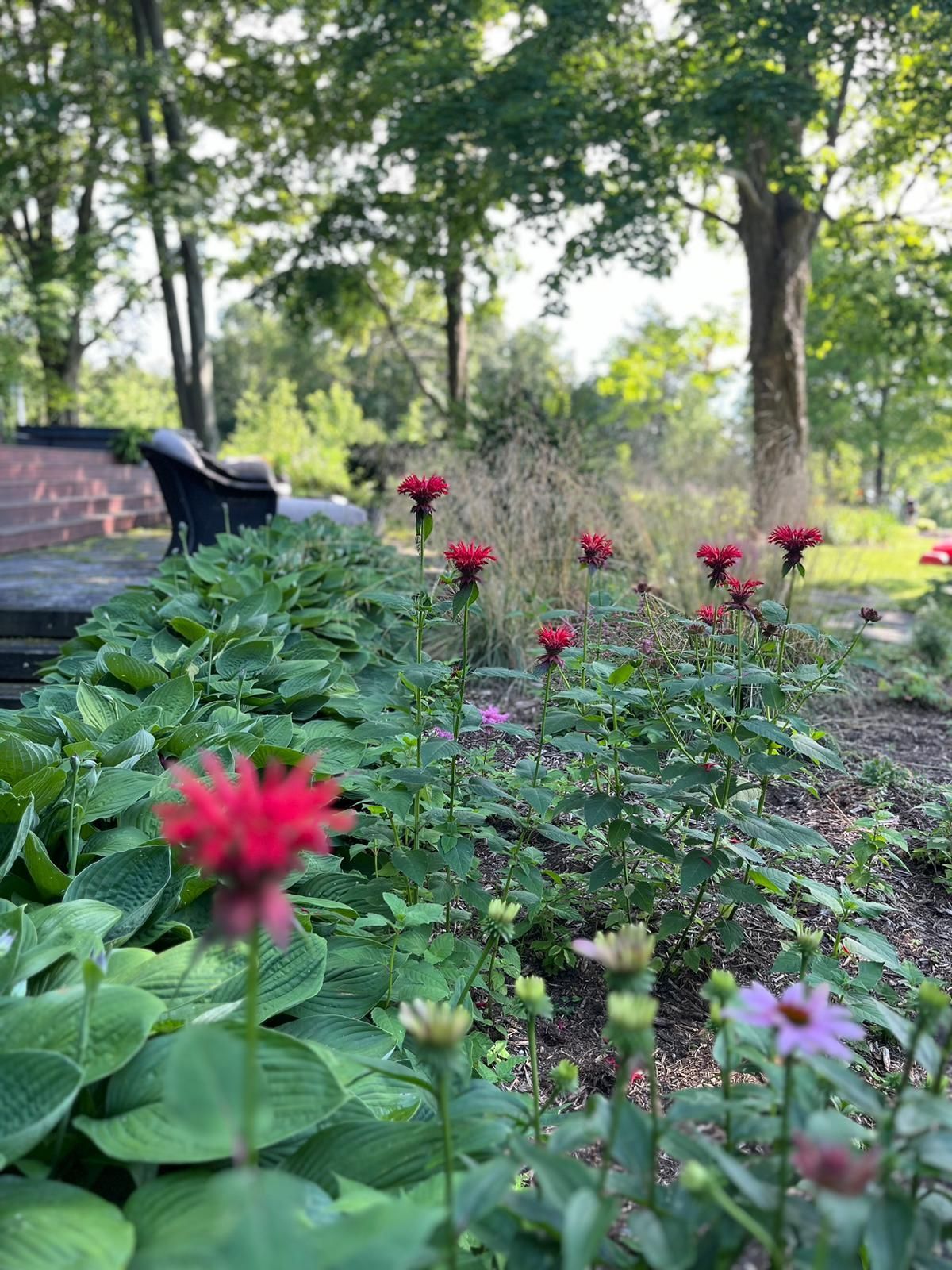
- Native, deep-rooted plantings that stabilize slopes, strengthen shorelines, and reduce maintenance over time
These solutions protect your investment while supporting the health of the watershed—especially important near Lake Simcoe, Lake Couchiching, and connected waterways.
Build it right so it lasts
Water reveals shortcuts. Base preparation, proper drainage layers, and thoughtful material choices are what keep patios level, steps safe, and shorelines stable through years of weather swings. For many families, the goal is peace of mind: arriving at the cottage on a Friday night (or stepping into the backyard after a long workday) and knowing everything is solid, safe, and functioning the way it should.
If you’re seeing pooling water, erosion, or “mysterious” washouts, it’s usually a sign the landscape needs a water-first plan. Designing with water flow doesn’t just solve problems—it prevents the next ones.