Community
Greening
Initiative
Become an environmental steward in our local community, support the health of local watersheds and contribute to a more resilient ecosystem through our Community Greening Initiative, presented by OMAH and Parklane Landscapes.
About the Initiative
Orillia Museum of Art and History and Parklane Landscapes have partnered together to create the Community Greening Initiative.
The project is intended to encourage on the benefits to naturalize gardens, shorelines, community spaces, increase biodiversity and help homeowners and youth identify ways to become more climate resilient at the lot level and reduce stormwater runoff to waterways in the watershed.

Fall Registration is open for September 26th 11am-3pm.
The free plants are on a first come - first serve basis, pre-registration just saves you time at entry.
Who Can Participate & When?
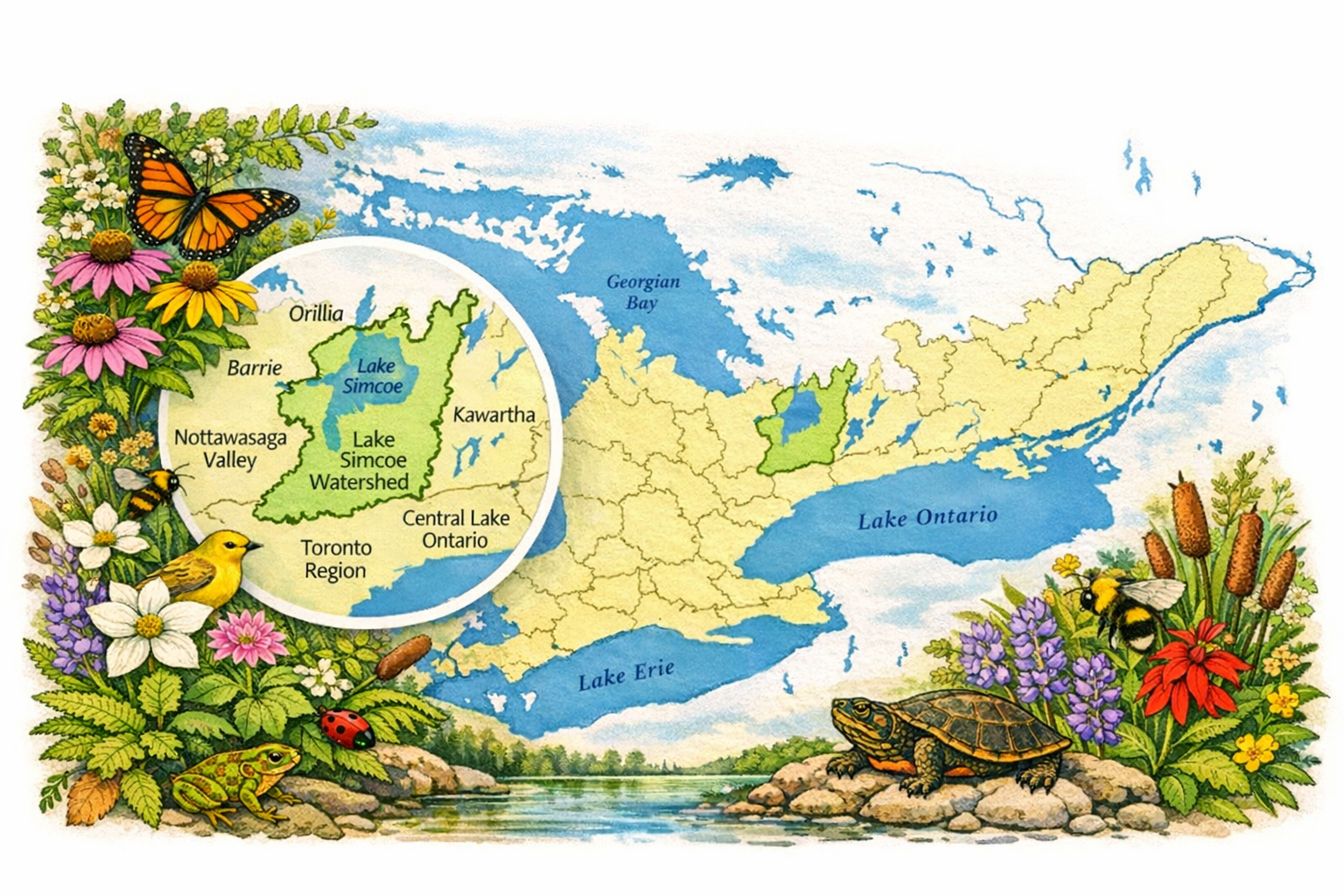
Eligibility is limited to properties within the Orillia & Lake Simcoe watershed.
When you sign up for your
Free Native Plantings, we’ll confirm your property is within the
Orillia & Lake Simcoe watershed
to ensure eligibility.
We would love the opportunity to map your property to track the initiatives impact.
If you have already registered for the
Fall
Giveaway; Bring your family or friends to our event at
250 Matchedash Street South, Orillia September 26th from 11am-3pm.
Please note the plants are on a first come first serve basis.
Take the plants home and enjoy planting them on your property, with the great feeling of knowing you are doing something positive for our local environment.
Enjoy
free plantings, and help us celebrate the impact by
sharing a photo after you’ve planted them on your property.
Plant List
Why Native Plants?
Native plants belong here. So they naturally support local pollinators and wildlife, strengthen biodiversity, and help naturalize gardens, shorelines, and community spaces. Their deep roots also improve soil health, increase climate resilience at the lot level, and reduce stormwater runoff into waterways across the watershed.
You will get a mix of Sun/ Shade Tress, Shrubs and Perennials;
Trees & Shrubs
Red Osier Dogwood - Cornus Sericea
High Bush Cranberry - Viburnum Triobum
Saskatoon Serviceberry - Amelanchier Alnifolia
Black Chokeberry - Aronia Melanocarpa
Alleghany Service Berry - Amelanchier Laevis
Nannyberry - Viburnum Lentago
Basswood - Tilia Americana
White Pine - Pinus Strobus
Sugar Maple - Acer Saccharum
Paper Birch - Betula Papyrifera
Perennials
To be confirmed.
Introduction
Our Community Greening Project is a hands-on initiative designed to help residents and youth restore healthier, more resilient landscapes across the Orillia & Lake Simcoe watershed. By providing native plants and practical guidance, we’re making it easier to naturalize gardens, shorelines, and shared community spaces—supporting biodiversity while improving how properties handle heavy rain and changing weather. Together, these small, lot-level actions help reduce stormwater runoff to local waterways and build a stronger, greener watershed for everyone.
How to Plant Native Seedlings
Planting native seedlings is easy and a great way to help your garden (and watershed) thrive. Choose a sunny or part-shade spot, loosen the soil, and dig a hole about the same depth as the seedling’s root plug. Gently remove the seedling, place it in the hole so the top of the plug sits level with the soil, backfill, and press lightly to remove air pockets. Water thoroughly right after planting, then keep the soil consistently moist for the first 1–2 weeks while roots establish. Finish with a thin layer of mulch around the plant (not touching the stem) to hold moisture and reduce weeds.
Care & Maintenance
Native seedlings are low-maintenance once established, but the first few weeks matter most. Water deeply after planting and keep soil consistently moist for 1–2 weeks, then water only during dry spells. Add a 2–3 inch layer of mulch to hold moisture and suppress weeds (keep mulch away from the stem). Weed regularly so young plants aren’t competing for light and nutrients, and avoid heavy fertilizing—native plants thrive in natural soils. By the end of the first season, most will be hardier, more drought-tolerant, and easier to care for year after year.
Winterization
First-year tip: if your seedlings are in an exposed spot, you can add light support so they don’t snap under snow or wind—place a small stake beside the plant and loosely tie it with soft twine, or use a simple plant collar/tree guard. Keep ties loose (no girdling) and remove supports in spring once growth resumes.
Orillia & Lake Simcoe Watershed Map